Quality Indicator II

You will notice two key themes throughout this portion of the rubric: teamwork and transitions.
Teams 1
Resources for supporting paraprofessionals:
Significant Cognitive Disabilities, Instruction
August Monthly Instructional Guide for Students with Complex Access Needs
Significant Cognitive Disabilities, Instruction
September Monthly Instructional Guide for Students with Complex Access Needs

Significant Cognitive Disabilities
Classroom Schedule Template

Significant Cognitive Disabilities
New Teacher and Paraeducator Module
Significant Cognitive Disabilities, Instruction
Defining Team Roles and Responsibilities

Significant Cognitive Disabilities, Instruction
Classroom Manual
Resources for helping the student's team work together:
Effective teams extend outside of the classroom and include other colleagues.
Significant Cognitive Disabilities, Inclusion, Instruction
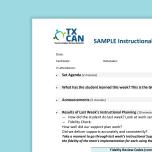
Instructional Support Meeting Agenda Template
Significant Cognitive Disabilities, Inclusion
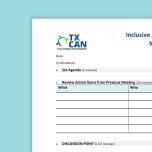
Inclusive Education Team Meeting Agenda/Minutes
This blank agenda template can be used to prepare for an inclusive education implementation team meeting.

Significant Cognitive Disabilities
Teamwork and Transitions

Significant Cognitive Disabilities, Inclusion, Instruction
Supports for Participation for Students with Complex Access Needs

Significant Cognitive Disabilities, ARD/IEP Supports
TIES Center Tip #2
Image Examples:
This schedule for the teacher and paraprofessionals varies by day, based on individual student coverage needs.

This staff schedule outlines each individual's responsibilities throughout the day.
| Activity | Teacher | Paraprofessional 1 | Paraprofessional 2 |
|---|---|---|---|
| Arrival | Cafeteria with Student C, Student D, and Student E | Bus with Student A (present transition object, and Student B | Car with Student F (present first-then chart) and Student G |
| Station Rotations | Prep materials for AM | Help Student A use object rotation schedule | Help student F use visual rotation schedule |
| Math - Whole Group | Provide direct instruction | Offer choice board to Student F every 15 min (5 min break) | Student A |
| Math - Small Group | M,W,F- Student D,E,G T, Th- Student A, B, C | Join teacher small group with student F (offer choice board every 15 min) | M,W,F- Student A, B, C T, Th- Student D, E, G |
| Science - Whole Group | Provide direct instruction | Student A | Offer choice board to Student F every 15 min (5 min break) |
| Science - Small Group | M,W,F- Student E,G T, Th- Student A, B, C | M,W,F- Student A, B, C T, Th- Student E, G | Join teacher small group with Student F (offer choice board every 15 min) |
| Restroom Break | Prep materials for PM | Assist Student E with clothes, provide mini schedule and assist in all steps with Student F | Change Student A and Student C |
| Student Lunch | Lunch Break | Assist Student F with getting tray, opening items, and clean up | Tube feed Student A |
| ELAR Whole Group | Provide direct instruction, ensure Student A uses the stander with tray | Lunch Break | Offer choice board to Student F every 15 min (5 min break) |
| Independent Work Jobs | Help student F use 3-bin work system | Help Student A use 3-bin work system (Tuesday Student A pull-out OT) | Lunch Break |
| Recess | Encourage Student A to use communication device with peers. | ||
| Restroom Break | Change Student A and Student C | Assist Student E with clothes, provide mini schedule and assist in all steps with Student F | |
| Social Studies - Whole Group | Provide direct instruction | Offer choice board to Student F every 15 min (5 min break) | Student A (Wednesday- Student A pull out PT) |
| Social Studies - Small Group | M,W,F- Student C, E, G T, Th- Student A, B | Join teacher small group with student F (offer choice board every 15 min) | M,W,F- Student A, B T, Th- Student C, E, G |
| Snack | Encourage Student A to use communication device with peers (no snack) (Monday Student A has push-in speech) | Assist student F with opening items and clean up (Monday Student F has push-in speech) | |
| Station Rotations | Work 1:1 with students M- Student D T- Student A, B, C, E W- Student D, F, G Th- Student A, B, C, E F- Student F, G | Help student F use visual rotation schedule (Tuesday Student F has push-in OT) | Help Student A use object rotation schedule |
| Motor Lab (M-Th) Adapted PE (F) | Conference Period/Prep home communication journals | M-Th- Encourage Student A to use communication device to direct other students through the rotations | M-Th- Help Student F use visual rotation schedule. |
| Dismissal | Student F and G to cars | Students C, D, and F to cars | Students A and B to bus |
Arrival
Teacher
Cafeteria with Student C, Student D, and Student E
Paraprofessional 1
Bus with Student A (present transition object, and Student B
Paraprofessional 2
Car with Student F (present first-then chart) and Student G
Station Rotations
Teacher
Prep materials for AM
Paraprofessional 1
Help Student A use object rotation schedule
Paraprofessional 2
Help student F use visual rotation schedule
Math - Whole Group
Teacher
Provide direct instruction
Paraprofessional 1
Offer choice board to Student F every 15 min (5 min break)
Paraprofessional 2
Student A
Math - Small Group
Teacher
M,W,F- Student D,E,G
T, Th- Student A, B, CParaprofessional 1
Join teacher small group with student F (offer choice board every 15 min)
Paraprofessional 2
M,W,F- Student A, B, C
T, Th- Student D, E, G
Science - Whole Group
Teacher
Provide direct instruction
Paraprofessional 1
Student A
Paraprofessional 2
Offer choice board to Student F every 15 min (5 min break)
Science - Small Group
Teacher
M,W,F- Student E,G
T, Th- Student A, B, CParaprofessional 1
M,W,F- Student A, B, C
T, Th- Student E, GParaprofessional 2
Join teacher small group with Student F (offer choice board every 15 min)
Restroom Break
Teacher
Prep materials for PM
Paraprofessional 1
Assist Student E with clothes, provide mini schedule and assist in all steps with Student F
Paraprofessional 2
Change Student A and Student C
Student Lunch
Teacher
Lunch Break
Paraprofessional 1
Assist Student F with getting tray, opening items, and clean up
Paraprofessional 2
Tube feed Student A
ELAR Whole Group
Teacher
Provide direct instruction, ensure Student A uses the stander with tray
Paraprofessional 1
Lunch Break
Paraprofessional 2
Offer choice board to Student F every 15 min (5 min break)
Independent Work Jobs
Teacher
Help student F use 3-bin work system
Paraprofessional 1
Help Student A use 3-bin work system
(Tuesday Student A pull-out OT)Paraprofessional 2
Lunch Break
Recess
Teacher
Encourage Student A to use communication device with peers.
Paraprofessional 1
No assignment specified.
Paraprofessional 2
No assignment specified.
Restroom Break
Teacher
No assignment specified.
Paraprofessional 1
Change Student A and Student C
Paraprofessional 2
Assist Student E with clothes, provide mini schedule and assist in all steps with Student F
Social Studies - Whole Group
Teacher
Provide direct instruction
Paraprofessional 1
Offer choice board to Student F every 15 min (5 min break)
Paraprofessional 2
Student A
(Wednesday- Student A pull out PT)
Social Studies - Small Group
Teacher
M,W,F- Student C, E, G
T, Th- Student A, BParaprofessional 1
Join teacher small group with student F (offer choice board every 15 min)
Paraprofessional 2
M,W,F- Student A, B
T, Th- Student C, E, G
Snack
Teacher
Encourage Student A to use communication device with peers (no snack)
(Monday Student A has push-in speech)Paraprofessional 1
No assignment specified.
Paraprofessional 2
Assist student F with opening items and clean up
(Monday Student F has push-in speech)
Station Rotations
Teacher
Work 1:1 with students
M- Student D
T- Student A, B, C, E
W- Student D, F, G
Th- Student A, B, C, E
F- Student F, GParaprofessional 1
Help student F use visual rotation schedule
(Tuesday Student F has push-in OT)Paraprofessional 2
Help Student A use object rotation schedule
Motor Lab (M-Th)
Adapted PE (F)
Teacher
Conference Period/Prep home communication journals
Paraprofessional 1
M-Th- Encourage Student A to use communication device to direct other students through the rotations
Paraprofessional 2
M-Th- Help Student F use visual rotation schedule.
Dismissal
Teacher
Student F and G to cars
Paraprofessional 1
Students C, D, and F to cars
Paraprofessional 2
Students A and B to bus
*Classroom staff meeting after dismissal on Tuesdays and Thursdays (10 min.)
*Classroom staff meeting after dismissal on Tuesdays and Thursdays (10 min.)
This sample shows the same schedule but is organized by students instead of staff. This may be useful for tracking the location of students or when building their individual visual schedules.
Color Code:
| Teacher |
| Paraprofessional 1 |
| Paraprofessional 2 |
| Can access and participate independently with regular supports |
Helping specific students:
| Student A – all day - use object schedule, move wheelchair, assist with access to materials, encourage communication device use |
| Student C – all day – has visual picture schedule, needs a verbal reminder to “check your schedule” at each transition |
| Student F – all day - use first-then chart, help remain on task with visual rule reminders |
| Activity | Student A | Student B | Student C | Student D | Student E | Student F | Student G |
|---|---|---|---|---|---|---|---|
| Arrival | Paraprofessional 1: Bus; present transition object | Paraprofessional 1: Bus | Teacher: Cafeteria | Teacher: Cafeteria | Teacher: Cafeteria | Paraprofessional 2: Car; present first-then chart | Paraprofessional 2: Car |
| Station Rotations <Teacher preps materials for AM> | Paraprofessional 1: Help use object rotation schedule | use visual rotation schedule | use visual rotation schedule | use visual rotation schedule | use visual rotation schedule | Paraprofessional 2: Help use visual rotation schedule | use visual rotation schedule |
| Math - Whole Group <Teacher provides direct instruction> | Paraprofessional 2 | Paraprofessional 1: offer choice board every 15 min (5 min break) <joins teacher small group> | |||||
| Math - Small Group | Paraprofessional 2: M, W, F | Paraprofessional 2: M, W, F | Paraprofessional 2: M, W, F | Teacher: M, W, F | Teacher: M, W, F | Teacher: M, W, F | |
| Teacher: T, Th | Teacher: T, Th | Teacher: T, Th | Paraprofessional 2: T, Th | Paraprofessional 2: T, Th | Paraprofessional 2: T, Th | ||
| Science - Whole Group <Teacher provides direct instruction> | Paraprofessional 1 | Science with General Education Class | Paraprofessional 2: offer choice board every 15 min (5 min break) <joins teacher small group> | ||||
| Science - Small Group | Paraprofessional 1: M, W, F | Paraprofessional 1: M, W, F | Paraprofessional 1: M, W, F | Teacher: M, W, F | Teacher: M, W, F | ||
| Teacher: T, Th | Teacher: T, Th | Teacher: T, Th | Paraprofessional 1: T, Th | Paraprofessional 1: T, Th | |||
| Restroom Break <Teacher preps materials for PM> | Paraprofessional 2: Change | Paraprofessional 2: Change | Paraprofessional 1: Assist with clothes | Paraprofessional 1: Mini schedule; assist all steps | |||
| Student Lunch <Teacher’s Lunch> | Paraprofessional 2: Tube feed | Lunch with General Education Class | Paraprofessional 1: Assist with getting tray, opening items, and cleanup | ||||
| ELAR Whole Group <teacher provides direct instruction> Para A at lunch> | Teacher: Uses stander with tray | Paraprofessional 2: offer choice board every 15 min (5 min break) | |||||
| Independent Work Jobs <Para B at lunch> | Paraprofessional 1: Help use 3-bin work system; T – pull out OT | use work system schedule | use work system schedule | use work system schedule | use work system schedule | Teacher: Help use 3-bin work system | use work system schedule |
| Recess | Teacher: Encourage use of communication device with peers | ||||||
| Restroom Break | Paraprofessional 1: Change | Paraprofessional 1: Change | Paraprofessional 2: Assist with clothes | Paraprofessional 2: Mini schedule; assist all steps | |||
| Social Studies - Whole Group <teacher provides direct instruction> | Paraprofessional 2: W – pull out PT | Social Studies with General Education Class | Paraprofessional 1: offer choice board every 15 min (5 min break) <joins teacher small group> | ||||
| Social Studies - Small Group | Paraprofessional 2: M, W, F | Paraprofessional 2: M, W, F | Teacher: M, W, F | Teacher: M, W, F | Teacher: M, W, F | ||
| Teacher: T, Th | Teacher: T, Th | Paraprofessional 2: T, Th | Paraprofessional 2: T, Th | Paraprofessional 2: T, Th | |||
| Snack | Teacher: No snack – encourage use of communication device with peers; M – push in speech | Paraprofessional 2: Assist with opening items and cleanup; M – push in speech | |||||
| Station Rotations <Teacher Works 1:1 with Students> | Paraprofessional 2: 1:1 T/Th; Help use object rotation schedule | 1:1 T/Th; use visual rotation schedule | 1:1 T/Th; use visual rotation schedule | 1:1 M/W; use visual rotation schedule | 1:1 T/Th; use visual rotation schedule | Paraprofessional 1: 1:1 W/F; Help use visual rotation schedule; T – push in OT | 1:1 W/F; use visual rotation schedule |
| Motor Lab (M-Th) Adapted PE (F) <Teacher’s Conference – preps home communication journals> | Paraprofessional 1: Lab – Encourage use of communication device to direct other students through the rotations | Lab – use visual rotation schedule | Lab – use visual rotation schedule | PE with General Education Class | Lab – use visual rotation schedule | Paraprofessional 2: Lab – Help use visual rotation schedule | Lab – use visual rotation schedule |
| Dismissal | Paraprofessional 2: Bus | Paraprofessional 2: Bus | Paraprofessional 1: Car | Paraprofessional 1: Car | Paraprofessional 1: Car | Teacher: Car | Teacher: Car |
Arrival
Student A
Paraprofessional 1: Bus; present transition object
Student B
Paraprofessional 1: Bus
Student C
Teacher: Cafeteria
Student D
Teacher: Cafeteria
Student E
Teacher: Cafeteria
Student F
Paraprofessional 2: Car; present first-then chart
Student G
Paraprofessional 2: Car
Station Rotations
<Teacher preps materials for AM>
Student A
Paraprofessional 1: Help use object rotation schedule
Student B
Independent participation with regular supports: use visual rotation schedule
Student C
Independent participation with regular supports: use visual rotation schedule
Student D
Independent participation with regular supports: use visual rotation schedule
Student E
Independent participation with regular supports: use visual rotation schedule
Student F
Paraprofessional 2: Help use visual rotation schedule
Student G
Independent participation with regular supports: use visual rotation schedule
Math - Whole Group
<Teacher provides direct instruction>
Student A
Paraprofessional 2
Student B
Independent participation with regular supports
Student C
Independent participation with regular supports
Student D
Independent participation with regular supports
Student E
Independent participation with regular supports
Student F
Paraprofessional 1: offer choice board every 15 min
(5 min break)
<joins teacher small group>Student G
Independent participation with regular supports
Math - Small Group
Student A
Paraprofessional 2: M, W, F
Teacher: T, Th
Student B
Paraprofessional 2: M, W, F
Teacher: T, Th
Student C
Paraprofessional 2: M, W, F
Teacher: T, Th
Student D
Teacher: M, W, F
Paraprofessional 2: T, Th
Student E
Teacher: M, W, F
Paraprofessional 2: T, Th
Student F
Paraprofessional 1: offer choice board every 15 min
(5 min break)
<joins teacher small group>Student G
Teacher: M, W, F
Paraprofessional 2: T, Th
Science - Whole Group
<Teacher provides direct instruction>
Student A
Paraprofessional 1
Student B
Independent participation with regular supports
Student C
Independent participation with regular supports
Student D
Independent participation with regular supports: Science with General Education Class
Student E
Independent participation with regular supports
Student F
Paraprofessional 2: offer choice board every 15 min
(5 min break)
<joins teacher small group>Student G
Independent participation with regular supports
Science - Small Group
Student A
Paraprofessional 1: M, W, F
Teacher: T, Th
Student B
Paraprofessional 1: M, W, F
Teacher: T, Th
Student C
Paraprofessional 1: M, W, F
Teacher: T, Th
Student D
Independent participation with regular supports: Science with General Education Class
Student E
Teacher: M, W, F
Paraprofessional 1: T, Th
Student F
Paraprofessional 2: offer choice board every 15 min
(5 min break)
<joins teacher small group>Student G
Teacher: M, W, F
Paraprofessional 1: T, Th
Restroom Break
<Teacher preps materials for PM>
Student A
Paraprofessional 2: Change
Student B
Independent participation with regular supports
Student C
Paraprofessional 2: Change
Student D
Independent participation with regular supports
Student E
Paraprofessional 1: Assist with clothes
Student F
Paraprofessional 1: Mini schedule; assist all steps
Student G
Independent participation with regular supports
Student Lunch
<Teacher’s Lunch>
Student A
Paraprofessional 2: Tube feed
Student B
Independent participation with regular supports
Student C
Independent participation with regular supports
Student D
Independent participation with regular supports: Lunch with General Education Class
Student E
Independent participation with regular supports
Student F
Paraprofessional 1: Assist with getting tray, opening items, and cleanup
Student G
Independent participation with regular supports
ELAR Whole Group
<teacher provides direct instruction>
Para A at lunch>
Student A
Teacher: Uses stander with tray
Student B
Independent participation with regular supports
Student C
Independent participation with regular supports
Student D
Independent participation with regular supports
Student E
Independent participation with regular supports
Student F
Paraprofessional 2: offer choice board every 15 min
(5 min break)Student G
Independent participation with regular supports
Independent Work Jobs
<Para B at lunch>
Student A
Paraprofessional 1: Help use 3-bin work system; T – pull out OT
Student B
Independent participation with regular supports: use work system schedule
Student C
Independent participation with regular supports: use work system schedule
Student D
Independent participation with regular supports: use work system schedule
Student E
Independent participation with regular supports: use work system schedule
Student F
Teacher: Help use 3-bin work system
Student G
Independent participation with regular supports: use work system schedule
Recess
Student A
Teacher: Encourage use of communication device with peers
Student B
Independent participation with regular supports
Student C
Independent participation with regular supports
Student D
Independent participation with regular supports
Student E
Independent participation with regular supports
Student F
Independent participation with regular supports
Student G
Independent participation with regular supports
Restroom Break
Student A
Paraprofessional 1: Change
Student B
Independent participation with regular supports
Student C
Paraprofessional 1: Change
Student D
Independent participation with regular supports
Student E
Paraprofessional 2: Assist with clothes
Student F
Paraprofessional 2: Mini schedule; assist all steps
Student G
Independent participation with regular supports
Social Studies - Whole Group
<teacher provides direct instruction>
Student A
Paraprofessional 2: W – pull out PT
Student B
Independent participation with regular supports
Student C
Independent participation with regular supports
Student D
Independent participation with regular supports: Social Studies with General Education Class
Student E
Independent participation with regular supports
Student F
Paraprofessional 1: offer choice board every 15 min
(5 min break)
<joins teacher small group>Student G
Independent participation with regular supports
Social Studies - Small Group
Student A
Paraprofessional 2: M, W, F
Teacher: T, Th
Student B
Paraprofessional 2: M, W, F
Teacher: T, Th
Student C
Teacher: M, W, F
Paraprofessional 2: T, Th
Student D
Independent participation with regular supports: Social Studies with General Education Class
Student E
Teacher: M, W, F
Paraprofessional 2: T, Th
Student F
Paraprofessional 1: offer choice board every 15 min
(5 min break)
<joins teacher small group>Student G
Teacher: M, W, F
Paraprofessional 2: T, Th
Snack
Student A
Teacher: No snack – encourage use of communication device with peers; M – push in speech
Student B
Independent participation with regular supports
Student C
Independent participation with regular supports
Student D
Independent participation with regular supports
Student E
Independent participation with regular supports
Student F
Paraprofessional 2: Assist with opening items and cleanup; M – push in speech
Student G
Independent participation with regular supports
Station Rotations
<Teacher Works 1:1 with Students>
Student A
Paraprofessional 2: 1:1 T/Th; Help use object rotation schedule
Student B
Independent participation with regular supports: 1:1 T/Th; use visual rotation schedule
Student C
Independent participation with regular supports: 1:1 T/Th; use visual rotation schedule
Student D
Independent participation with regular supports: 1:1 M/W; use visual rotation schedule
Student E
Independent participation with regular supports: 1:1 T/Th; use visual rotation schedule
Student F
Paraprofessional 1: 1:1 W/F; Help use visual rotation schedule; T – push in OT
Student G
Independent participation with regular supports: 1:1 W/F; use visual rotation schedule
Motor Lab (M-Th)
Adapted PE (F)
<Teacher’s Conference – preps home communication journals>
Student A
Paraprofessional 1: Lab – Encourage use of communication device to direct other students through the rotations
Student B
Independent participation with regular supports: Lab – use visual rotation schedule
Student C
Independent participation with regular supports: Lab – use visual rotation schedule
Student D
Independent participation with regular supports: PE with General Education Class
Student E
Independent participation with regular supports: Lab – use visual rotation schedule
Student F
Paraprofessional 2: Lab – Help use visual rotation schedule
Student G
Independent participation with regular supports: Lab – use visual rotation schedule
Dismissal
Student A
Paraprofessional 2: Bus
Student B
Paraprofessional 2: Bus
Student C
Paraprofessional 1: Car
Student D
Paraprofessional 1: Car
Student E
Paraprofessional 1: Car
Student F
Teacher: Car
Student G
Teacher: Car
10-minute classroom staff meeting T, Th after dismissal.
Teams 2
The campus administrator plays an important role in establishing a campus’s climate and culture. These tools guide the campus principal in advocating for the needs of students and are aligned with the eight core elements of inclusive education.
Resources for advocating for the needs of students:
Significant Cognitive Disabilities, Inclusion
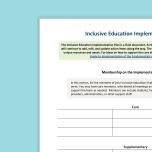
Inclusive Education Implementation Plan
Significant Cognitive Disabilities, Inclusion
The Fundamentals of Inclusive Education for Students with Complex Access Needs

Significant Cognitive Disabilities, Inclusion
Ideas for Advocating for Students with Complex Access Needs
Teams 3
The principal has a direct impact on the scheduling of students, the placement of students into classrooms, the way those classes are set up, and the logistics of running the school. Equally important, the principal has direct impact on the human resources of the school – the quality of the teaching, the way in which the adults work or do not work together, and the expectations for the teachers and staff. In addition, the principal sets the tone and the climate of the school, affecting the school culture; how students, staff and families are treated; and the general feel of the school.
Causton, Julie and Theoharis, George. The Principal’s Handbook for Leading Inclusive Schools. Paul H. Brookes Publishing Co., 2017.
Teams 4
Resources for supporting professional development:

Significant Cognitive Disabilities
Regional Education Service Centers

Significant Cognitive Disabilities
Texas SPED Support: Learning Library

Significant Cognitive Disabilities
TSBVI online courses

Significant Cognitive Disabilities, Instruction, ARD/IEP Supports
Autism Focused Intervention Resources & Modules

Significant Cognitive Disabilities
Modules Addressing Special Education and Teacher Education
Significant Cognitive Disabilities, Instruction
December Monthly Instructional Guide for Students with Complex Access Needs

Significant Cognitive Disabilities
SWIFT in 60 - Strong Educator Support System Video
Administrator Interview Resource
Texas SPED Support has created an Administrator Interview Resource to assist administrators when interviewing educator applicants who will support students with complex access needs. It aligns with the five quality indicators from the rubric. After hiring, administrators can use this tool to identify gaps in new employees’ performance and refer them to the Texas SPED Support website to search for resources specific to their area of need.

Significant Cognitive Disabilities, Inclusion, Instruction, ARD/IEP Supports, Assistive Technology
Administrator Interview Resource for Educators Working with Students with Complex Access Needs
Teams 5
Resources for supporting professional development:
Significant Cognitive Disabilities
Regional Education Service Centers
Significant Cognitive Disabilities
Texas SPED Support: Learning Library
Significant Cognitive Disabilities
TSBVI online courses
Significant Cognitive Disabilities, Instruction, ARD/IEP Supports
Autism Focused Intervention Resources & Modules
Significant Cognitive Disabilities
Modules Addressing Special Education and Teacher Education
Significant Cognitive Disabilities, Instruction
December Monthly Instructional Guide for Students with Complex Access Needs

Significant Cognitive Disabilities
Happiness can lead to Success in the Classroom Video
Teams 6
Resources for instructional planning and collaboration between general and special educators:

Significant Cognitive Disabilities
TEKS


Significant Cognitive Disabilities
STAAR Alternate 2 Resources
Significant Cognitive Disabilities, Early Childhood
Texas Prekindergarten Guidelines

Significant Cognitive Disabilities, Early Childhood
Early Childhood Vertical Alignment
Significant Cognitive Disabilities, Inclusion, Instruction
Supports for Participation for Students with Complex Access Needs

Significant Cognitive Disabilities, Inclusion, Instruction
Accessible Instructional Materials (AIM) for Students with Complex Access Needs

Significant Cognitive Disabilities, Instruction
Beyond Time and Money: Teaching Mathematics to Students with Complex Access Needs
Significant Cognitive Disabilities, Inclusion, Instruction
Universal Design for Learning (UDL) for Students with Complex Access Needs

Significant Cognitive Disabilities, Instruction
Taking a Standard and Making It Accessible
Teams 7
Resources for assisting teams with data collection:

Significant Cognitive Disabilities, Instruction
Sample Grading Rubric for Students with Complex Access Needs
Significant Cognitive Disabilities, Instruction
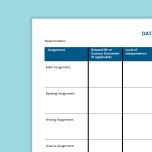
Sample Data Collection Tool for Students with Complex Access Needs
This data collection tool can be used to document classroom assignments and how they relate to IEP or essence statements, the level of independence in which the student completed the assignment, their level of mastery, and any revisions made to the assignment. This document aligns with the Rubric of
Significant Cognitive Disabilities, Instruction
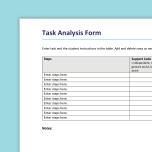
Task Analysis Form

ARD/IEP Supports, Significant Cognitive Disabilities, Autism, Behavior, Evaluation, Instruction
Data Collection: Trial by Trial Recording

ARD/IEP Supports, Behavior, Significant Cognitive Disabilities, Autism, Evaluation, Instruction
Data Collection: Duration Recording

ARD/IEP Supports, Behavior, Significant Cognitive Disabilities, Autism, Evaluation, Instruction
Data Collection: Frequency Recording

ARD/IEP Supports, Behavior, Significant Cognitive Disabilities, Autism, Evaluation, Instruction
Data Collection: Interval Recording

ARD/IEP Supports, Behavior, Significant Cognitive Disabilities, Autism, Evaluation, Instruction
Data Collection: A-B-C Recording
Significant Cognitive Disabilities, Instruction
September Monthly Instructional Guide for Students with Complex Access Needs
Autism, Behavior
Data Collection - Labels

Autism, Behavior
Data Collection - Masking Tape

Autism, Behavior
Data Collection - Pocket Transfer
Autism, Behavior
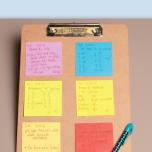
Data Collection - Sticky Notes

Significant Cognitive Disabilities, ARD/IEP Supports, Instruction, Behavior
Data Collection Module
Image Examples:
This teacher uses a calendar to track the days her student exhibits the target behavior.

This teacher uses a data sheet to collect a student's performance on work task boxes.

This teacher placed tally marks showing each time the student performed the target behavior in a thirty-minute session. Sessions where the student met their goal are highlighted.

This teacher used a timer to record the number of seconds the student held onto an item that was placed in their hand. Trials where the student met their goal are highlighted.

This teacher created bins that hold student-specific activities and the related data collection forms.

This example uses the grading rubric from Texas SPED Support, which allows educators to use task analysis to break down the assignment or activity into individualized steps, considering the prerequisite access points and specific conditions needed for their student.

This teacher uses sticky notes (representing 5-minute chunks of time) to share data with a student, visually representing their time on task.

Teams 8
Resources for helping teams collaborate:
Significant Cognitive Disabilities, Inclusion, Instruction
Instructional Support Meeting Agenda Template

Significant Cognitive Disabilities, ARD/IEP Supports, Instruction, Behavior
Data-Based Decisions Module

Significant Cognitive Disabilities, ARD/IEP Supports, Instruction, Behavior
Reporting Data to Educational Partners Module

Significant Cognitive Disabilities, Instruction
Setting an Agenda for Team Meetings
Teams 9
Resources for helping teams proactively solve problems:

Significant Cognitive Disabilities, ARD/IEP Supports, Instruction, Behavior
Center on Positive Behavioral Interventions and Supports Classroom PBIS

Significant Cognitive Disabilities, ARD/IEP Supports, Instruction, Behavior
PBIS World

Significant Cognitive Disabilities, ARD/IEP Supports, Instruction, Behavior, Evaluation
IRIS Center Functional Behavior Assessment

Significant Cognitive Disabilities, Behavior
Texas SPED Support Behavior Trainings

Significant Cognitive Disabilities, Behavior
Texas SPED Support Behavior Videos
Significant Cognitive Disabilities
Importance of Communication Between Families & Teachers
Teams 10
Resources for student confidentiality:

Significant Cognitive Disabilities
IDEA and FERPA Confidentiality Provisions

Significant Cognitive Disabilities
Legal Framework - Confidentiality of Information

Significant Cognitive Disabilities
Student Confidentiality
Teams 11
Resources for positive family communication:
Significant Cognitive Disabilities, Instruction
September Monthly Instructional Guide for Students with Complex Access Needs

Significant Cognitive Disabilities
Setting the Stage for Parent-Professional Collaboration

Significant Cognitive Disabilities
Collaborating with Families Module
Autism, Behavior
Family/Teacher Communication Form
Autism, Behavior
Take Home Folder

Autism
Parent-Professional Relationships

Autism
Collaborative Teaming
Teams 12, 12a, 12b, 12c
Resources for student transitions:

Significant Cognitive Disabilities
Transitioning to an Inclusive Setting
Significant Cognitive Disabilities, Instruction
May Monthly Instructional Guide for Students with Complex Access Needs

Significant Cognitive Disabilities, Inclusion, Transition
Transitioning a Student with Complex Access Needs from a Self-Contained to a General Education Classroom

Early Childhood
Supporting Early Childhood Transitions Quick Reference Guide

Significant Cognitive Disabilities, Transition
Transitioning Students to New Educational Settings

Significant Cognitive Disabilities, Instruction
Student Portfolios for Students with Complex Access Needs

Significant Cognitive Disabilities
Supporting Student Transitions
Image Examples:
Here is an example of a student transition follow-up form a teacher uses to check up on former students.

In this image is a student transition follow-up form filled out for a student named Mitchell. His past teacher, Mrs. Chase, and his new teacher Mr. Copeland, met on 8/23/23.
Mr. Copeland wondered if Mitchell sat with the class during lunch. Mrs. Chase indicated that he did, using a visual support first-then chart with the symbols for "eat" and "read." They also sent Mitchell a stack of books to the cafeteria and mentioned he would remain seated if he has an activity such as this.
After this check-in, Mrs. Chase will send the icons for the first-then chart to Mr. Copeland. Mr. Copeland will get car racing books and make a lunch book basket for Mitchell.
The additional follow-up date indicates N/A on the form.
Effective Teams Review
What can educators do?
- Create a classroom manual that outlines roles and expectations for each staff member.
- Design a classroom staff schedule so that everyone knows for each segment of the day: where they should be, who they are supporting, and what materials are needed.
- Designate lunchtimes and debrief times on the daily schedule.
- Keep a running agenda for staff debriefs, designating spots for needs, concerns, questions, and celebrations for a quick discussion.
- Model instructional strategies for paraprofessionals.
- Demonstrate presumed competence, where staff encourage higher student expectations for all students.
- Collaborate between special and general educators, discussing lessons, possible modifications, and opportunities for inclusion.
- Be mindful of how you talk about your students, maintain confidentiality, and be respectful.
- Create data collection tools that effectively measure progress, train staff on their use, and schedule time for the team to analyze the data to adjust instructional and behavioral strategies.
- Consistently review behavior antecedents to address concerns proactively.
- Build strong relationships with families, by actively listening to their hopes and concerns, sharing information, and helping them hold high expectations for students.
- Create student portfolios that demonstrate progress and showcase effective strategies and share the portfolio with the student's next teacher.
- Take the student to visit the next educational setting before the transition and follow up after the student has transitioned.
Effective Teams Training
For more information on the key themes from Quality Indicator II: Effective Teams, take the free online course Teamwork and Transitions.
